I have been informed by my professor Nik Dholakia that a proposal to publish two articles coauthored by him and I in the Encyclopedia of Global Business has been accepted. This is exciting news for both of us, and we will be working diligently on preparing two articles, one on Oman, the other on Qatar, for the Encyclopedia. It will be published in 2008 by Sage Publications. Both Nik and I will be collaboratively writing and editing our work over the next month or so. I will be posting updates every week to inform everyone of our progress.
I have come up with preliminary notes regarding the general region of my area of research that we will be grabbing excerpts from. We have been told that each article must be under 750 words, and must utilize 6-10 scholarly publications for reference. I have begun researching reputable sources that discuss the shifting economic environments of the Middle Eastern states.
This is what I have so far, and will be editing constantly (so be sure to keep posted!):
Notes
General
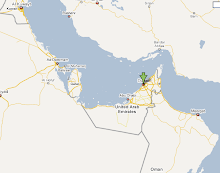
The Gulf Region is one of the oldest and continuously inhabited regions in the world. Dilmus, a flourishing civilization on the coast of the Gulf, came into existence over 5,000 years ago. The two most prominent resources in the region were historically pearls and dates. The trade of these two products on the international market continued to become the major products of the Gulf until the discovery of oil. Soon after nations in the region began to tap into the “black gold,” it became the major contributor to the GDP and almost the only export commodity in the region. The Gulf has always been regarded as the “Land of Living,” “Land of Paradise,” and “Home of the Gods.” The Eastern coast is certainly flourishing, and experiencing exponential growth as a result of residual wealth from fossil fuels. A crucial move toward regionalism in the Gulf was effected in 1979 with the formation of the Gulf Cooperation Council (GCC), which is comprised of Oman, Kuwait, Qatar, Bahrain, Saudi Arabia and the United Arab Emirates. The steady supply of this resource will soon become exhausted, just as every other resource in the region seemingly has.
This inevitable cycle will give rise to a new commodity, however, which many of the region’s leaders have realized. Tourism is the fastest growing industry in the Gulf, and nearly every aspect of society in the Eastern Gulf nations cater to just that. This is invariably attracting significant growth in every other business sector in the region. International commerce and trade have found their new centers of influence; Dubai, Doha, Abu Dhabi, Kuwait City and Muscat. The Middle East of the old is in one of the largest phase of economic transformation that the world has ever experienced.
With new commercial growth comes tremendous economic and social responsibility on behalf of the local governments. Economic Free Trade Zones have been established in the States of the United Arab Emirates, Oman and Qatar. A region-wide campaign to strengthen the private sector has been regarded as the strategic goal for securing future incomes from non-oil sources. Given this objective, industrialization has become a common agenda in the development plans of the Gulf states. To ultimately achieve this objective of diversification, nations in the region have diverted a sizeable segment of revenues received from oil exports to finance ambitious programs of industrialization. As a result, joint ventures with foreign partners were formed to import technologies capable of building the economies. Buildings, trade centers, hotels and islands have been developed with the assistance of international investment. This is resulting in the emergence of locally based investment firms and agencies, such as Dubai World, currently providing capital for over $1 trillion worth of projects in domestic and international markets.
In recent years, the delicate political climate in the Middle East has often overshadowed critical discussions related to economic and social development in the Arab world. The region's economic fragility has intensified due to the economic backlash following September 11, 2001. Scholars and researchers are now focusing on the chalenges of improving the region's competiveness at a particurally critical time.
Oman
Qatar
With respects to the general Arabian Penninsula, Qatar has been one of the earliest regions occupied by Muslims. During the mid to late 18th century, a branch of the Utub tribe in Kuwait known as the Al Khalifa emigrated to Qatar and eventually settled on the northwest coast of the peninsula. The Al Khalifa had a long-established reputation as accomplished sailors and skilled traders, and they soon became the mainstay of commercial development in this region. The Ottoman and British Empires had imperialized the region during the past three centuries. The British initially sought the peninsula for its ideal location in relation to their shipping routes to their colonial interests in India. The weakening of the colonial power of the British Empire was prevalent following the second World War, especially after the independence of India in 1947. Pressure for a British withdrawal increased in the 1950s. They announced a political withdrawal from the Gulf region in 1968, resulting in Qatar joining seven other Trucial States in a federation. Regional disputes entailed, and Qatar ultimately became an independent sovereign nation on September 3, 1971.
Qatar has experienced exponential growth in its economy following the discovery of oil. Many social and economic developments have ensued following its declaration of independence, including rights for women, and the launch of the region’s largest media outlet, Al Jazeera. Since 1995, Emir Hamad bin Khalifa Al Thani has ruled Qatar. Qatar currently ranks as the ninth wealthiest nation in the world per capita.
Nearly all of Qatar’s native citizens proclaim Islam, but international expatriats form a majority of the country’s residents.
Bibliography:
Abbas Abdelkarim, Change and Development in the Gulf, (Macmillan Press, 1999); Ragaei el Mallakh, Qatar, Energy and Development, (Croom Helm, Ltd., 1985); Ian Skeet, Oman: Politics and Development, (St. Martin's Press, Inc., 1992); A. Lopez-Claros and K. Schwab, The Arab World Competetiveness Report, (World Economic Forum, Palgrave Macmillan, 2005); M. Noland and H. Pack, The Arab Economies in a Changing World , (Peter G. Peterson Institute for International Economics, 2007); N. Raphaeli and B. Gersten, “Sovereign Wealth Funds: Investment Vehicles for the Persian Gulf Countries”, Middle East Quarterly (2008);
Wednesday, March 12, 2008

Monday, February 25, 2008
Oman and Globalization: A Reality
In 1970, Oman had 10 miles of paved road, no organized educational or health care system, and its fledgling oil economy was faltering. Sultan Qaboos Bin Said took the throne at the turn of the decade, and was faced with a looming economic dilemma: diversify or begin to witness the decline and decay of a once oil-rich Middle East economic power. Part of this dilemma also included major issues with Islamic traditions. Bin Said recognized that he had to incorporate every member of his society, even if it meant going against what his culture had traditionally done. He knew that by incorporating this one factor, potentially even a major competitive advantage, he could gain ground on neighboring nations and their quickly diversifying economic planes.
Bin Said began to introduce women as his front-runners to lead his economic overhaul and expansion.
Fast forward to present day, and the 3.5 million citizens share an enviable prosperity, women have training and career opportunities equal to men, traditional culture and Muslim religious practices are honored, and international differences are respected. Better yet, bin Said has chosen a woman to head the new Ministry of Tourism - Oman's new economic powerhouse.
I am beginning to notice a trend after my latest research into Oman. I am finally beginning to understand, from a culmination of my international business courses (a majority of which coming from my research on the Middle East), intercultural communication training, and overseas experience, that globalization has nearly reached its peak in world affairs. This globalizing trend, comprised of a migration of ideas, individuals, education, language and commerce are affecting every area of our small world. From Rwanda to Oman to Siberia to Abu Dhabi, billions upon billions of the earth's citizens are becoming more and more dependant on one another. The trend, however, that I am noticing is a combination of the keen competitive advantage factor and the assimilation of cultural differences across international borders. Individuals in every reach of society are slowly, but surely, beginning to realize the importance of incorporating the world's accepted ideas and perspectives with expansion within their own societies, traditional cultures, businesses and governments. In order to be accepted, and at least considered, by the international community, an entity such as a government or a corporation must adapt, reformat and include. It is inevitable that the world will only continue to become smaller, flatter (term keyed by Thomas Freidman) and more accessible by a majority of its inhabitants.
The nations of the "Other Middle East" have recognized this trend, and jumped on before it has gotten too late. Other nations, such as Saudi Arabia, have held on firmly to their roots, specifically religious traditions. They are a very conservative nation, barely allowing women to enter the general work force. This has not only unfortunately tarnished their international image by not treating every member of society as equals, but forbade many multinational companies from penetrating this market, thus preventing many potentially lucrative investment opportunities.
We individuals who have been exposed to this international community, worked with "foreigners," witnessed the differences, begun to accept them and adapt to them understand that as other nations will not allow certain things, we likewise have to be wary of upsetting or offending them with our apathy and ignorance. As universal understanding becomes more prevalent, differences will become more relevant and noticeable, but I feel that with such channels and resources like the Internet, we will witness a general acceptance by a majority of individuals in our world. Wars are inevitable, and some people will never emerge from their "bubbles," but that is another story. This may happen many decades, or centuries into the future, but we are truly witnessing the one of the largest transitions of global understanding in history.
With that tangent tackled and off of my mind, I would like to re-introduce Oman in all of it's glitz an glamor. Virtually every ambitious Omani has gone abroad to study, work and live, only to return to their homeland with a better understanding of the world, its cultures and exactly what people want. With Oman's oil reserves virtually tapped, their tourism industry is on the rise, and is their dominant economic sector. Historic Muscat, the nation's capital, is bustling with visitors from every reach of the globe. Europeans are attracted to the grandeur of the capital's castles, only to rest their heads in one of the 2 dozen 5 star hotels.
Just as bin Rashid Maktoum did in Dubai, bin Said has realized the tremendous economic potential by basing his national economy on the justice and principles of a free economy. Bin Said has done such a tremendous job in transforming the face of his nation's economic stance. He began in 1970, introduced a basic 5-year plan to introduce new facets of the economy. Then in 1995, he held a conference titled "Vision Conference: Oman 2020." This 25 year plan outlined his economic goals for Oman, including the reshaping of the role of the government in the economy, the broadening of private sector participation, diversification of the economic base and sources of income, and to ultimately globalize the Omani economy as much as possible. He even posted a 15% raise in worker's salaries, placing Oman in the category of high-medium income countries of the world. It is tremendous economic plans and historic transformations such as this that nations across the world are in dire need of. As risky as they may be, they are almost necessary to keep up with and compete with today's global economies.
In the coming decades, we will certainly witness a shift in economic power, mainly (middle) East, and far East. Oman is a prime example of a successful step, one which has the next 12 years of its economic life planed out and molded perfectly for economic success.
Bin Said began to introduce women as his front-runners to lead his economic overhaul and expansion.
Fast forward to present day, and the 3.5 million citizens share an enviable prosperity, women have training and career opportunities equal to men, traditional culture and Muslim religious practices are honored, and international differences are respected. Better yet, bin Said has chosen a woman to head the new Ministry of Tourism - Oman's new economic powerhouse.
I am beginning to notice a trend after my latest research into Oman. I am finally beginning to understand, from a culmination of my international business courses (a majority of which coming from my research on the Middle East), intercultural communication training, and overseas experience, that globalization has nearly reached its peak in world affairs. This globalizing trend, comprised of a migration of ideas, individuals, education, language and commerce are affecting every area of our small world. From Rwanda to Oman to Siberia to Abu Dhabi, billions upon billions of the earth's citizens are becoming more and more dependant on one another. The trend, however, that I am noticing is a combination of the keen competitive advantage factor and the assimilation of cultural differences across international borders. Individuals in every reach of society are slowly, but surely, beginning to realize the importance of incorporating the world's accepted ideas and perspectives with expansion within their own societies, traditional cultures, businesses and governments. In order to be accepted, and at least considered, by the international community, an entity such as a government or a corporation must adapt, reformat and include. It is inevitable that the world will only continue to become smaller, flatter (term keyed by Thomas Freidman) and more accessible by a majority of its inhabitants.
The nations of the "Other Middle East" have recognized this trend, and jumped on before it has gotten too late. Other nations, such as Saudi Arabia, have held on firmly to their roots, specifically religious traditions. They are a very conservative nation, barely allowing women to enter the general work force. This has not only unfortunately tarnished their international image by not treating every member of society as equals, but forbade many multinational companies from penetrating this market, thus preventing many potentially lucrative investment opportunities.
We individuals who have been exposed to this international community, worked with "foreigners," witnessed the differences, begun to accept them and adapt to them understand that as other nations will not allow certain things, we likewise have to be wary of upsetting or offending them with our apathy and ignorance. As universal understanding becomes more prevalent, differences will become more relevant and noticeable, but I feel that with such channels and resources like the Internet, we will witness a general acceptance by a majority of individuals in our world. Wars are inevitable, and some people will never emerge from their "bubbles," but that is another story. This may happen many decades, or centuries into the future, but we are truly witnessing the one of the largest transitions of global understanding in history.
With that tangent tackled and off of my mind, I would like to re-introduce Oman in all of it's glitz an glamor. Virtually every ambitious Omani has gone abroad to study, work and live, only to return to their homeland with a better understanding of the world, its cultures and exactly what people want. With Oman's oil reserves virtually tapped, their tourism industry is on the rise, and is their dominant economic sector. Historic Muscat, the nation's capital, is bustling with visitors from every reach of the globe. Europeans are attracted to the grandeur of the capital's castles, only to rest their heads in one of the 2 dozen 5 star hotels.
Just as bin Rashid Maktoum did in Dubai, bin Said has realized the tremendous economic potential by basing his national economy on the justice and principles of a free economy. Bin Said has done such a tremendous job in transforming the face of his nation's economic stance. He began in 1970, introduced a basic 5-year plan to introduce new facets of the economy. Then in 1995, he held a conference titled "Vision Conference: Oman 2020." This 25 year plan outlined his economic goals for Oman, including the reshaping of the role of the government in the economy, the broadening of private sector participation, diversification of the economic base and sources of income, and to ultimately globalize the Omani economy as much as possible. He even posted a 15% raise in worker's salaries, placing Oman in the category of high-medium income countries of the world. It is tremendous economic plans and historic transformations such as this that nations across the world are in dire need of. As risky as they may be, they are almost necessary to keep up with and compete with today's global economies.
In the coming decades, we will certainly witness a shift in economic power, mainly (middle) East, and far East. Oman is a prime example of a successful step, one which has the next 12 years of its economic life planed out and molded perfectly for economic success.
Dubai World: An International "Dubai-ification"
Dubai World. When I was first introduced to this company by professor Nik Dholakia, I imagined something along the lines of Disney World, or simply another out-of-this-world, multi-billion dollar tourist attraction in the heart of the U.A.E. that would take me a few minutes to truly grasp and visualize. To my astonishment, Dubai World is just the opposite. It is an investment firm that manages and supervises a portfolio of businesses and projects for the Dubai Government across a wide range of industrial segments and projects that promote Dubai "Free Trade Zone" as a hub for commerce and trading. It was established by the Vice President & Prime Minister of UAE and Ruler of Dubai himself, his highness, Sheikh Mohammed bin Rashid Al Maktoum in March, 2006. Just a few months later in July, it was officially launched as a holding company with more than 50,000 employees in over 100 cities around the globe. The companies managed by Dubai World include DP World, the world's third largest port operator, Jafza, Nakheel, Dubai Drydocks, Limitless, among many others international firms. It also has extensive real estate investments in the US, the UK and South Africa.
Dubai World has now entered a new and very challenging market: Djibouti, a small East African country that boasts high rates of poverty, unemployment and a tortured and scared countryside. The nation has witnessed horrific suppression from cutthroat Somali military dictators from the neighboring war-torn nation of Somalia. It sits directly on the Southern tip of the Red Sea, with Yemen just a few miles across the busy straight separating Africa from the Middle Eastern peninsula. Not many individuals have ever heard of this small nation of under half a million inhabitants, but when Sultan Ahmed bin Sulayem, co-founder and chairman of Dubai World came witnessed its prime location and great economic potential, he made a move. Not many investors would make the plunge into a nation plagued with poverty and military and political uncertainty, but Dubaians see the greatest challenges and risks offering the largest potential economic return.
Sulayem looks at a large prehistoric, desolate salt lake over an hours drive from electricity and fresh water and envisions a luxury resort, complete with hotels and a golf course. He relates Djibouti to Dubai just 30 years ago; a city of sand, poverty and uncertainty. Many look to Sulayem as a genius venture capitalist, heading the operations of one of the fastest growing and most successful holding companies the world has ever witnessed. Others see him as a genuine bringer of good-will, and certainly good fortune, transforming cities once considered doomed and untouchable by the outside world into high class luxury centers of bustling commerce and tourism. His vision is unique, so say the least, and his ventures even more unprecedented, but the reality is that Dubai World has hit more than enough goldmines. He imagines that virtually any city, under any circumstances, has the potential for greatness, with a few billion dollars of investment capital of course.
Djibouti is just one of the latest examples of his venture and vision for rebuilding an entire city and transforming a nation's economy. This is just a snapshot of the current holdings and major investment projects underway by Dubai World:
Dubai World has now entered a new and very challenging market: Djibouti, a small East African country that boasts high rates of poverty, unemployment and a tortured and scared countryside. The nation has witnessed horrific suppression from cutthroat Somali military dictators from the neighboring war-torn nation of Somalia. It sits directly on the Southern tip of the Red Sea, with Yemen just a few miles across the busy straight separating Africa from the Middle Eastern peninsula. Not many individuals have ever heard of this small nation of under half a million inhabitants, but when Sultan Ahmed bin Sulayem, co-founder and chairman of Dubai World came witnessed its prime location and great economic potential, he made a move. Not many investors would make the plunge into a nation plagued with poverty and military and political uncertainty, but Dubaians see the greatest challenges and risks offering the largest potential economic return.
Sulayem looks at a large prehistoric, desolate salt lake over an hours drive from electricity and fresh water and envisions a luxury resort, complete with hotels and a golf course. He relates Djibouti to Dubai just 30 years ago; a city of sand, poverty and uncertainty. Many look to Sulayem as a genius venture capitalist, heading the operations of one of the fastest growing and most successful holding companies the world has ever witnessed. Others see him as a genuine bringer of good-will, and certainly good fortune, transforming cities once considered doomed and untouchable by the outside world into high class luxury centers of bustling commerce and tourism. His vision is unique, so say the least, and his ventures even more unprecedented, but the reality is that Dubai World has hit more than enough goldmines. He imagines that virtually any city, under any circumstances, has the potential for greatness, with a few billion dollars of investment capital of course.
Djibouti is just one of the latest examples of his venture and vision for rebuilding an entire city and transforming a nation's economy. This is just a snapshot of the current holdings and major investment projects underway by Dubai World:
Sunday, February 17, 2008
Attack of the SWFs
Some business journalists are having a field day writing about SWFs -- they cheekily get the attention of readers by throwing in this abbreviation and then go on to explain that, no, they are not talking about Single While Females looking for dates. Rather, they are talking about Sovereign Wealth Funds.
Yes, the SWFs of the second type, especially from the Middle East, are on a strident march.
From the perspective of this blog, it is interesting to note that some of the biggest Sovereign Wealth Funds are based in what we are calling "The Other Middle East". The grand-daddy of SWFs is the one from Abu Dhabi, whose asset base is approaching $1 trillion.
In late 2007 and early 2008, Sovereign Wealth Funds pumped in money to buy stakes in Citigroup, Merrill Lynch, Morgan Stanley, and UBS. Nearly $60 billion flowed to troubled Wall Street banks, mostly from SWFs in the Middle East and Asia. Citigroup alone got a money injection of $7.5 billion investment from the Abu Dhabi Investment Authority, the world's richest sovereign fund.
Qatar is also on the move.
Qatar's state-controlled fund is accumulating shares in Credit Suisse. Qatar plans to spend $15 billion on European and U.S. bank stocks during 2008-2009.
With a population of less than 1 million, Qatar owns the world's third-biggest natural gas reserves and 1.3 percent of global crude oil-reserves, generating surpluses for investment by the investment authority. Qatar's state investment fund managed $60 billion in early 2008.
Sheikh Hamad bin Jasim bin Jaber al-Thani, Prime Minister of Qatar, also serves as the CEO of the Qatar Investment Authority. At a conference in Washington DC in February 2008, Sheikh Hamad also indicated some strategic diversification plans for Qatar Investment Authority. Qatar is creating funds of a $1 billion each in Finland and Malaysia, and Indonesia is next on the anvil. In this way, Qatar will have strong local access to investment opportunities in the EU and ASEAN.
Because of growing political concerns, especially in the United States where military and homeland security issues are often on front burners, officials from "the Other Middle East", such as Sheikh Hamad, seem to be on a diplomatic overdrive to reassure the U.S. that these investments are coming from Middle East countries that are friendly to the U.S., and that there are no intentions to grab control of strategic U.S. business entities. They also point out, quite rightly, that for decades U.S. firms have been investing in these countries.
Now, perhaps it is time for the SWFs to stalk the SWMs - Strapped Western Multinationals!
Nik Dholakia
Professor
University of Rhode Island
Yes, the SWFs of the second type, especially from the Middle East, are on a strident march.
From the perspective of this blog, it is interesting to note that some of the biggest Sovereign Wealth Funds are based in what we are calling "The Other Middle East". The grand-daddy of SWFs is the one from Abu Dhabi, whose asset base is approaching $1 trillion.
In late 2007 and early 2008, Sovereign Wealth Funds pumped in money to buy stakes in Citigroup, Merrill Lynch, Morgan Stanley, and UBS. Nearly $60 billion flowed to troubled Wall Street banks, mostly from SWFs in the Middle East and Asia. Citigroup alone got a money injection of $7.5 billion investment from the Abu Dhabi Investment Authority, the world's richest sovereign fund.
Qatar is also on the move.
Qatar's state-controlled fund is accumulating shares in Credit Suisse. Qatar plans to spend $15 billion on European and U.S. bank stocks during 2008-2009.
With a population of less than 1 million, Qatar owns the world's third-biggest natural gas reserves and 1.3 percent of global crude oil-reserves, generating surpluses for investment by the investment authority. Qatar's state investment fund managed $60 billion in early 2008.
Sheikh Hamad bin Jasim bin Jaber al-Thani, Prime Minister of Qatar, also serves as the CEO of the Qatar Investment Authority. At a conference in Washington DC in February 2008, Sheikh Hamad also indicated some strategic diversification plans for Qatar Investment Authority. Qatar is creating funds of a $1 billion each in Finland and Malaysia, and Indonesia is next on the anvil. In this way, Qatar will have strong local access to investment opportunities in the EU and ASEAN.
Because of growing political concerns, especially in the United States where military and homeland security issues are often on front burners, officials from "the Other Middle East", such as Sheikh Hamad, seem to be on a diplomatic overdrive to reassure the U.S. that these investments are coming from Middle East countries that are friendly to the U.S., and that there are no intentions to grab control of strategic U.S. business entities. They also point out, quite rightly, that for decades U.S. firms have been investing in these countries.
Now, perhaps it is time for the SWFs to stalk the SWMs - Strapped Western Multinationals!
Nik Dholakia
Professor
University of Rhode Island
Wednesday, February 13, 2008
Is Qatar the Next Dubai?
In Doha, the capital of Qatar, hundreds of cranes peak the skyline. To some, views of the city may even be mistaken with the skyline of Dubai City. This seems to be the theme on the East Coast of the Arabian Peninsula, but why? The race to become the largest, most recognized economic city in the world is most certainly on. With only 7-8% of this region's economy funding rapid construction and historic economic growth, where is the rest coming from? When I search for new and interesting articles and sources on Middle Eastern economic expansion, I continue to stumble upon record growth in the tourism industry. It seems as if every major city in the region is frantically building up, towards the sky, with high hopes of attracting the world's most affluent. It is working quite well, with the largest concentration of 5 (and beyond) star hotels in the world, the world's wealthiest with seemingly bottomless wallets and a keen craving for luxury are arriving in droves.
But what can cities such as Kuwait City, Doha and Dubai create, innovate or build to set them apart from each other? In today's globalizing world, the tourism industry is becoming one of the most aggressive. Shifting demographics are giving rise to a greater distribution of wealth and disposable income. Coupled with pressure from the international community, cities, not just companies, require a unique competitive advantage to attract the best of the best.
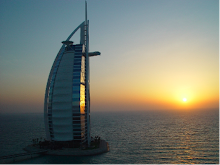
Cities all around the globe certainly have their own distinct symbols that tourists and traveling business people alike can recognize in an instant. New York City has the Statue of LIberty, Rome the Colloseum, Paris the Eiffel Tower and Sydney the Opera House. These are all historical landmarks that have been around for ages, but cities in the Middle East are essentially "new." They must create symbols that the international community will learn to recognize, and associate with pristine fame and fortune. In Dubai, the unofficial symbol is the Burj al Arab; the 7 star hotel shaped to resemble the sail of a dhow. Doha has their own unique "symbol" as well. The Pearl, a $2.5 billion, 985-acre artificial island loaded with five-star hotels, two million square feet of high-end shopping is currently under construction. It will attract more than 1 million visitors per year upon completion.
Dubai is certainly shooting for the recognition of the world's pemeir tourist destination, but it will face some serious competition from Doha in the next few years. With a population of 400,000 and investment reaching into the tens of billions, the city has significant room to grow. It seems as if Qatar is mirroring the growth of the UAE, implementing every idea of new construction, attraction and super structure in from Dubai in their city of Doha. Qatar Airlines, a 5 star, first class airline, is experiencing incredible growth in the international marketplace, on par with Emirates Airlines. Will projects such as the Pearl be enough to attract some potential out of towners to Qatar instead of the UAE? Only time will tell. More on Qatar (pronounced CUT-er) and photos in the near future.
-KD
But what can cities such as Kuwait City, Doha and Dubai create, innovate or build to set them apart from each other? In today's globalizing world, the tourism industry is becoming one of the most aggressive. Shifting demographics are giving rise to a greater distribution of wealth and disposable income. Coupled with pressure from the international community, cities, not just companies, require a unique competitive advantage to attract the best of the best.
Cities all around the globe certainly have their own distinct symbols that tourists and traveling business people alike can recognize in an instant. New York City has the Statue of LIberty, Rome the Colloseum, Paris the Eiffel Tower and Sydney the Opera House. These are all historical landmarks that have been around for ages, but cities in the Middle East are essentially "new." They must create symbols that the international community will learn to recognize, and associate with pristine fame and fortune. In Dubai, the unofficial symbol is the Burj al Arab; the 7 star hotel shaped to resemble the sail of a dhow. Doha has their own unique "symbol" as well. The Pearl, a $2.5 billion, 985-acre artificial island loaded with five-star hotels, two million square feet of high-end shopping is currently under construction. It will attract more than 1 million visitors per year upon completion.
Dubai is certainly shooting for the recognition of the world's pemeir tourist destination, but it will face some serious competition from Doha in the next few years. With a population of 400,000 and investment reaching into the tens of billions, the city has significant room to grow. It seems as if Qatar is mirroring the growth of the UAE, implementing every idea of new construction, attraction and super structure in from Dubai in their city of Doha. Qatar Airlines, a 5 star, first class airline, is experiencing incredible growth in the international marketplace, on par with Emirates Airlines. Will projects such as the Pearl be enough to attract some potential out of towners to Qatar instead of the UAE? Only time will tell. More on Qatar (pronounced CUT-er) and photos in the near future.
-KD
Sunday, February 3, 2008
Today's Show Is Brought To You By The Number 5 - For A Cost Of $6.8 Million
I had to refrain from doing it again, but I almost started this post with the opening "imagine." Now that I think of it, every aspect of "The Other Middle East" is seemingly unimaginable, so unreal that we have to sit back, close our eyes, and picture a world unlike any other we have ever witnessed. I suppose the only way to truly appreciate the prestige of a city such as Dubai, is to experience it first hand. Sometimes I cannot beleive everything that I discover about this region, the construction, the international influence and the plans that are sure to build this part of the world up to become the most attractive destination for business and leisure seeking travelers alike. I will begin to post more photographs and videos to deliver yourself just a bit closer to the "real" experience, because half of what I post probably seems overly embellished anyways...
Enough dreaming, but will you please just "imagine" yourself at an auction in the heart of Dubai City. This isn't an ordinary auction; there are dozens of incredibly successful businessmen bidding on numbers. Yes numbers. The lower the number, the higher the bid. If the number may fall into the double digits, or even single digits, prepare yourself for a heated battle ending with the winning bidder shelling out as much money Tiger Woods makes in one year of his professional career. What exactly are these men bidding on? Vanity license plates.
The video will explain everything, but I wanted to prepare you for the shocked reaction that is sure to ensue. The brief interview follows an incredibly wealthy stock broker in Dubai, bidding on a vanity license plate for his new Rolls Royce. I wont spoil the outcome, so here's the link:
Vanity Plate Auction
Now that you have hopefully viewed the video, you can begin to realize the scope of the wealth within the UAE. It is not just from big oil executives, because only 6% of the UAE's revenue is derived from fossil fuels. Hard working, high class citizens such as this stock broker are running the city, and it seems as if Dubai will soon turn into the new Hong Kong, or NYC, or Singapore.
On a side note, I cannot imagine what it must be like to drive around the city of Dubai, and how many 6 and 7 figure cars you would see. The only image that I can draw up in my mind is driving down the new strip in Las Vegas, only on steroids. Only this is what every major road in Dubai would look like.
-KD
Enough dreaming, but will you please just "imagine" yourself at an auction in the heart of Dubai City. This isn't an ordinary auction; there are dozens of incredibly successful businessmen bidding on numbers. Yes numbers. The lower the number, the higher the bid. If the number may fall into the double digits, or even single digits, prepare yourself for a heated battle ending with the winning bidder shelling out as much money Tiger Woods makes in one year of his professional career. What exactly are these men bidding on? Vanity license plates.
The video will explain everything, but I wanted to prepare you for the shocked reaction that is sure to ensue. The brief interview follows an incredibly wealthy stock broker in Dubai, bidding on a vanity license plate for his new Rolls Royce. I wont spoil the outcome, so here's the link:
Vanity Plate Auction
Now that you have hopefully viewed the video, you can begin to realize the scope of the wealth within the UAE. It is not just from big oil executives, because only 6% of the UAE's revenue is derived from fossil fuels. Hard working, high class citizens such as this stock broker are running the city, and it seems as if Dubai will soon turn into the new Hong Kong, or NYC, or Singapore.
On a side note, I cannot imagine what it must be like to drive around the city of Dubai, and how many 6 and 7 figure cars you would see. The only image that I can draw up in my mind is driving down the new strip in Las Vegas, only on steroids. Only this is what every major road in Dubai would look like.
-KD
Saturday, February 2, 2008
Emirates Airlines
"Know you before they trust you, trust you before they fly you."
This was the sales pitch to Emirates Airline executives used by Bob Minihan of ISM Travel Lifestyle Marketing. Imagine one of the most premier luxury business class airliners, Emirates Airlines in the world attempting to penetrate an entirely new market. Imagine this market being the United States of America, the largest economical power in the world. Imagine the date of the planned marketing push: March 1st, 2002; just 6 months after 9/11/2001.
As an airline based in the United Arab Emirates, and its international hub being the bustling, booming city of Dubai, Emirates had a lot going for it during the summer of 2001. It enjoyed a 95% booking rate on all of its major international flights out of Dubai. Its customer service was ranked among the best in the world and its airlines were rated 5 star ultra luxury. They were one of the most desired airline to fly on by the most prestigous businesspeople in the world, and they were the fastest growing airline in the Middle East. Then 19 men from the Middle East hijacked 4 airplanes and created one of the most unfortunate and tragic days in the United States history.
Emirates Airlines had no idea how to enter the US market at this point. This is when they turned to Boston's top marketing agency, ISM, to prepare them for penetration in the US, and most importantly convince American citizens that this airline was 100% safe, reliable and unique.
I had the pleasure of attending a presentation at an American Marketing Association meeting in Providence two nights ago. Bob Minihan represented his company, and made a truly fascinating presentation on repositioning Emirates Airlines and marketing them in America post-9/11. He gave us a brief background on his company, and the other accounts they have, such as Four Seasons Hotels. He is a photographer, which made for some incredible shots of him and his team in Dubai on their multiple visits for photo shoots and meetings with Emirates executives. He had absolutely no prior knowledge of UAE or Dubai for that matter, and I found his perspective on his first experiences very interesting. He discussed the tremendous urban development, such as the Palm Islands, the Burj al Arab and the Burj Dubai, the 7 star hotel that he had the fortunate opportunity to stay in. Bob mentioned how congested the streets of Dubai were; that they had not planned an efficient transportation infrastructure during the the construction boom, and that it often took over one and a half hours to get from one end of the city to the other. He enjoyed his tour guides, and sticking to true Middle Eastern tradition, he and his crew were chauffeured around the city, exposed to all of the major sights and sounds, and experienced the lifestyle of pampered tourists days before the actual business negotiations took place.
The nightlife was incredible, and he had the opportunity to speak with many locals concerning their perspective on America, and American commerce. He found that "Dubaians" have issues with America, but not with Americans. He was well received, and treated with tremendous respect. He also noted that shopping in Dubai is a national hobby. He attended the Dubai Shopping Festival at 11PM one evening, and noted that everything and everyone was entirely in order. He attributed this conduct to the fact that not many people drink in Dubai. There were no shortages of incrediblly state of the art bars, but most of the dominant religions in the city, Islam and Hindu, forbid the use of alcoholic beverages. Bob had a successful meeting with the executive at Emirates, and returned to the states with a multi million dollar account, and the most grueling marketing project he had ever taken charge of.
ISM's plan was to begin their marketing push by holding a handful of focus groups in New York City. The participants were all businesspeople, who generally fly business class on international flights. Bob showed us clips from one of the focus groups, and it was evident that there was significant distrust, fear and uncertainty among the participants concerning an "Arabic airline." They asked, "how do I know who is flying the plane?" and "why would I chose an airline from the Middle East where the 9/11 terrorists came from when I can chose an Asian or a European carrier?" All of these were valid questions, but some statements were more intense, including, "I refuse to fly on Emirates because I would feel as if everyone working on the plane is a terrorist." It was apperent that New Yorkers posessed a lot of hatred, and mainly fear cocnerning anything Middle East-oriented, and the they had a lot of difficult work to do. Emirates main focus was initiating non-stop service from NYC to Dubai, posing an even more difficult obstacle, getting through to New Yorkers who just witnessed, many first hand, the attacks just 6 months ago. How could they convince Americans to fly on Emirates?
I am currently in contact with Bob Minihan, and will soon be posting some of the incredible Emirates advertisements used post 9/11 in America during this marketing campaign. It was unfortunate that Bob and his marketing team had to work so hard to reposition such a wonderful company in America, but the circumstances were understandable. Their first ad campanigns included showing the pilots of Emirates Airlines walking around New York City. The pilots represent over 90 nationalities, with a majority being highly experienced veterans from British Airways. Bob flew one pilot, an Australian who flew with British for 26 years, to New York for a photo shoot. This was the beginning of the campaign, and a healthy start to penetrating New York City. Another idea was to show the multinational/multilingual crew of Emirates in other ads. They showed photographs of two beautiful flight attendents onboard an Emirates flight, both originally from California, in another ad. These ads would answer the question "who is flying this plane?" and "who is working to make my flight the best possible experience?"
The campaign was turning into more of an educational repositioning of the brand. ISM quickly began to saturate the New York market with images and phrases of Emirates Airlines. Emirates felt that it was time to initiate their non-stop service from NYC, and opened 5 daily flights between NYC and Dubai soon thereafter. ISM bought out Grand Central Station for one entire month, and New Yorkers were bombarded with over 3000 different ads for the airlines. One month later, the nonstop service out of New York was flying with over 90% booked capacity.
Emirates is now the fastest growing airline in the world, and when interviewed, 99% of first time flyers said that they would fly again. Emirates now flies non stop out of Toronto, Canada and Houston. They are planning a non stop out of LAX in the next few months. They just made a purchase of 50 Airbus A380s a few months ago, and will boast the world's largest fleet of this superjet. The next closest airline with the most A380's is Singapore, with 2. Emirates will be the first airline to bring the A380 to America this fall.
Bob and his team did a successful job of repositioning Emirates, and letting America know that Emirates is "not an Arab airline, but an international airline based in the Middle East." Bob is proactively working on the American Emirates account, but his work greatly influences other international marketing agencies that create campaigns for Emirates as well. In fact, the local Dubai marketing campaign recently boasted a 70 story high poster of the Statue of Liberty on the side of a building currently under construction promoting the non stop service from Dubai to NYC.
Other international agencies do not have any problems marketing Emirates in their countries, because 9/11 did not happen anywhere else. Americans also hold grudges and are greatly influenced by the media which generate stereotypical mentalities and are generally the origin of much racism present in the mainstream today. British citizens enjoy dozens of non stop Emirates flights every day to Dubai, as the most tourists in Dubai originate in the UK. Other nations don't have a problem with the Middle East; we do.
More on the ISM Emirates marketing campaign and images later.
-KD
This was the sales pitch to Emirates Airline executives used by Bob Minihan of ISM Travel Lifestyle Marketing. Imagine one of the most premier luxury business class airliners, Emirates Airlines in the world attempting to penetrate an entirely new market. Imagine this market being the United States of America, the largest economical power in the world. Imagine the date of the planned marketing push: March 1st, 2002; just 6 months after 9/11/2001.
As an airline based in the United Arab Emirates, and its international hub being the bustling, booming city of Dubai, Emirates had a lot going for it during the summer of 2001. It enjoyed a 95% booking rate on all of its major international flights out of Dubai. Its customer service was ranked among the best in the world and its airlines were rated 5 star ultra luxury. They were one of the most desired airline to fly on by the most prestigous businesspeople in the world, and they were the fastest growing airline in the Middle East. Then 19 men from the Middle East hijacked 4 airplanes and created one of the most unfortunate and tragic days in the United States history.
Emirates Airlines had no idea how to enter the US market at this point. This is when they turned to Boston's top marketing agency, ISM, to prepare them for penetration in the US, and most importantly convince American citizens that this airline was 100% safe, reliable and unique.
I had the pleasure of attending a presentation at an American Marketing Association meeting in Providence two nights ago. Bob Minihan represented his company, and made a truly fascinating presentation on repositioning Emirates Airlines and marketing them in America post-9/11. He gave us a brief background on his company, and the other accounts they have, such as Four Seasons Hotels. He is a photographer, which made for some incredible shots of him and his team in Dubai on their multiple visits for photo shoots and meetings with Emirates executives. He had absolutely no prior knowledge of UAE or Dubai for that matter, and I found his perspective on his first experiences very interesting. He discussed the tremendous urban development, such as the Palm Islands, the Burj al Arab and the Burj Dubai, the 7 star hotel that he had the fortunate opportunity to stay in. Bob mentioned how congested the streets of Dubai were; that they had not planned an efficient transportation infrastructure during the the construction boom, and that it often took over one and a half hours to get from one end of the city to the other. He enjoyed his tour guides, and sticking to true Middle Eastern tradition, he and his crew were chauffeured around the city, exposed to all of the major sights and sounds, and experienced the lifestyle of pampered tourists days before the actual business negotiations took place.
The nightlife was incredible, and he had the opportunity to speak with many locals concerning their perspective on America, and American commerce. He found that "Dubaians" have issues with America, but not with Americans. He was well received, and treated with tremendous respect. He also noted that shopping in Dubai is a national hobby. He attended the Dubai Shopping Festival at 11PM one evening, and noted that everything and everyone was entirely in order. He attributed this conduct to the fact that not many people drink in Dubai. There were no shortages of incrediblly state of the art bars, but most of the dominant religions in the city, Islam and Hindu, forbid the use of alcoholic beverages. Bob had a successful meeting with the executive at Emirates, and returned to the states with a multi million dollar account, and the most grueling marketing project he had ever taken charge of.
ISM's plan was to begin their marketing push by holding a handful of focus groups in New York City. The participants were all businesspeople, who generally fly business class on international flights. Bob showed us clips from one of the focus groups, and it was evident that there was significant distrust, fear and uncertainty among the participants concerning an "Arabic airline." They asked, "how do I know who is flying the plane?" and "why would I chose an airline from the Middle East where the 9/11 terrorists came from when I can chose an Asian or a European carrier?" All of these were valid questions, but some statements were more intense, including, "I refuse to fly on Emirates because I would feel as if everyone working on the plane is a terrorist." It was apperent that New Yorkers posessed a lot of hatred, and mainly fear cocnerning anything Middle East-oriented, and the they had a lot of difficult work to do. Emirates main focus was initiating non-stop service from NYC to Dubai, posing an even more difficult obstacle, getting through to New Yorkers who just witnessed, many first hand, the attacks just 6 months ago. How could they convince Americans to fly on Emirates?
I am currently in contact with Bob Minihan, and will soon be posting some of the incredible Emirates advertisements used post 9/11 in America during this marketing campaign. It was unfortunate that Bob and his marketing team had to work so hard to reposition such a wonderful company in America, but the circumstances were understandable. Their first ad campanigns included showing the pilots of Emirates Airlines walking around New York City. The pilots represent over 90 nationalities, with a majority being highly experienced veterans from British Airways. Bob flew one pilot, an Australian who flew with British for 26 years, to New York for a photo shoot. This was the beginning of the campaign, and a healthy start to penetrating New York City. Another idea was to show the multinational/multilingual crew of Emirates in other ads. They showed photographs of two beautiful flight attendents onboard an Emirates flight, both originally from California, in another ad. These ads would answer the question "who is flying this plane?" and "who is working to make my flight the best possible experience?"
The campaign was turning into more of an educational repositioning of the brand. ISM quickly began to saturate the New York market with images and phrases of Emirates Airlines. Emirates felt that it was time to initiate their non-stop service from NYC, and opened 5 daily flights between NYC and Dubai soon thereafter. ISM bought out Grand Central Station for one entire month, and New Yorkers were bombarded with over 3000 different ads for the airlines. One month later, the nonstop service out of New York was flying with over 90% booked capacity.
Emirates is now the fastest growing airline in the world, and when interviewed, 99% of first time flyers said that they would fly again. Emirates now flies non stop out of Toronto, Canada and Houston. They are planning a non stop out of LAX in the next few months. They just made a purchase of 50 Airbus A380s a few months ago, and will boast the world's largest fleet of this superjet. The next closest airline with the most A380's is Singapore, with 2. Emirates will be the first airline to bring the A380 to America this fall.
Bob and his team did a successful job of repositioning Emirates, and letting America know that Emirates is "not an Arab airline, but an international airline based in the Middle East." Bob is proactively working on the American Emirates account, but his work greatly influences other international marketing agencies that create campaigns for Emirates as well. In fact, the local Dubai marketing campaign recently boasted a 70 story high poster of the Statue of Liberty on the side of a building currently under construction promoting the non stop service from Dubai to NYC.
Other international agencies do not have any problems marketing Emirates in their countries, because 9/11 did not happen anywhere else. Americans also hold grudges and are greatly influenced by the media which generate stereotypical mentalities and are generally the origin of much racism present in the mainstream today. British citizens enjoy dozens of non stop Emirates flights every day to Dubai, as the most tourists in Dubai originate in the UK. Other nations don't have a problem with the Middle East; we do.
More on the ISM Emirates marketing campaign and images later.
-KD
Wednesday, January 30, 2008
A Day in Dubai
My face-to-face experience in "the other Middle East" is just a lovely day spent in Dubai, in between flights. The flight from JFK landed in the morning, and the flight to Kolkata, India was in late evening. A good friend, my MBA class fellow who I had not seen for over two decades, agreed graciously to pick me up at the airport and give me a feel for Dubai. He is a CEO level executive in the chemical industry, so it was possible for him to arrange a day just to laze around with me.
It was a very pleasant day -- sunny but not unduly warm (it was mid-winter in USA). Among the highlights of the day:
The place is so unreal, yet so palpably real, that it leaves you dizzy. All the building activity is on a rush schedule, as if to get the post-petroleum economy in place way, way before petroleum resources run out. Which they might soon, at least in the case of Dubai, for among the UAE emirates, Dubai is not that oil rich.
If China as a country seems to be on an economic development rush, the city-state of Dubai is in a red-hot, jet-speed super rush.
Nik Dholakia
Professor
University of Rhode Island
It was a very pleasant day -- sunny but not unduly warm (it was mid-winter in USA). Among the highlights of the day:
- Driving around the bustling construction sites... one after another after another. I have not seen such concentration of construction sites in one place, ever.
- Mid-morning stroll through a semi-open-air mall, enjoying a cup of cappuccino with a view of the ponds and canals that give a Venice-like feel and a view of the towering Burj Dubai hotel.
- Later, a visit to the huge Mall of the Emirates and the stunning indoor ski area. It was mind-boggling to see ski lifts, skiers, and little kids learning to ski and skate at the bottom of the hill, all inside a building that looks like a huge, tilted aircraft hangar from the outside.
- There is an entire road devoted to educational buildings. One after another are branch campuses of leading educational institutions from Europe, India, and so on.
- Lunch at the Dubai Golf Club, where Tiger Woods has launched an annual golf tournament.
- A drive through the enormous Jebel Ali port and free trade zone, with miles and miles of warehouses and assembly plants and petroleum tanks, and of course deep-water berths and cranes for loading and unloading of vessels.
- Drive to the outlying sand dunes, where -- as the sunset approaches -- All-Terrain Vehicles (ATVs) romp through the sands while SUVs loaded with tourists offer dare-devil steep dune rides.
The place is so unreal, yet so palpably real, that it leaves you dizzy. All the building activity is on a rush schedule, as if to get the post-petroleum economy in place way, way before petroleum resources run out. Which they might soon, at least in the case of Dubai, for among the UAE emirates, Dubai is not that oil rich.
If China as a country seems to be on an economic development rush, the city-state of Dubai is in a red-hot, jet-speed super rush.
Nik Dholakia
Professor
University of Rhode Island
Monday, January 28, 2008
Networking
As a major complement to my research, I will be exploring a variety of resources that both Professor Dholakia and myself determine will be beneficial to our understanding of the economic climates of the region. I will be developing a valuable network of individuals, those who have done business in the Middle East, lived in the region, attend school in the region, are in academia or are connected through politics in one way or another.
I was directed to my first contact through my father, Stephen, who lives and works in Scranton, Pennsylvania. He has a business contact who he knows personally and professionally, by the name of David Culp. David is the President and CEO of Luichart International, LLC, which was established in June, 2007 with the merging of World Trade Group Inc, based in Pittston, Pennsylvania, and Luichart Technology Ltd. They have conducted business in many regions of the world, including China and the UK, and are currently focused on extensive alternative energy systems as well as RFID technology and asset management systems. They are committed to commercialize and bring these innovative technologies to the market.
In a very detailed email conversation with David, he discussed his ideas for a venture into the promising markets of Dubai: "Back in May, Dr. Calvin Tan (his business partner) and I had discussed addressing the Middle East market with the manufacture of composite medical gas cylinders with an embedded RFID tag in freeport Mina Jebel Ali. We had talked seeking a joint venture with an Arab company, thus the product would be “local” and we could avoid import taxes and having an Arab partner naturally would make the product more attractive to Arab companies."
I am looking forward to continuing our discussion on the Middle East and discovering more about his business talks with investors. I am particularly interested in learning more about the business culture in the region, if it is the traditional, conservative environment, or if it is a hybrid of old traditions and new western ideas. I will post updates to our ongoing conversations, and hope to introduce new contacts whom engage in business dealings in the region as my research progresses.
-KD
I was directed to my first contact through my father, Stephen, who lives and works in Scranton, Pennsylvania. He has a business contact who he knows personally and professionally, by the name of David Culp. David is the President and CEO of Luichart International, LLC, which was established in June, 2007 with the merging of World Trade Group Inc, based in Pittston, Pennsylvania, and Luichart Technology Ltd. They have conducted business in many regions of the world, including China and the UK, and are currently focused on extensive alternative energy systems as well as RFID technology and asset management systems. They are committed to commercialize and bring these innovative technologies to the market.
In a very detailed email conversation with David, he discussed his ideas for a venture into the promising markets of Dubai: "Back in May, Dr. Calvin Tan (his business partner) and I had discussed addressing the Middle East market with the manufacture of composite medical gas cylinders with an embedded RFID tag in freeport Mina Jebel Ali. We had talked seeking a joint venture with an Arab company, thus the product would be “local” and we could avoid import taxes and having an Arab partner naturally would make the product more attractive to Arab companies."
I am looking forward to continuing our discussion on the Middle East and discovering more about his business talks with investors. I am particularly interested in learning more about the business culture in the region, if it is the traditional, conservative environment, or if it is a hybrid of old traditions and new western ideas. I will post updates to our ongoing conversations, and hope to introduce new contacts whom engage in business dealings in the region as my research progresses.
-KD
Unfortunate Stereotypes
To reiterate on the previous posting, one of the major goals of this blog will be to dissuade the common Western stereotypical thought concerning the region. As unfortunate as stereotyping is, it is a reality, often fueled by widespread misinformation and the media. When I tell my close friends and co workers about my directed study research, their initial reaction is generally unenthusiastic. However, as soon as I bring up the theme of my study, and discuss the importance of studying the rising economies of this region, and the fact that I will not be researching the conflict areas, the attention tends to be regained. I do not have any particular reason for reactions such as this, but I will attribute much of the American perspective on the region to the horrific events that occurred on 9/11/2001. Unfortunately, racism and hatred are almost always a result of such epic events as 9/11, and many individuals in America were persecuted for their skin color, Arabic decent and especially religion. This is inevitable, but as we move further away from this date, we as a nation are beginning to learn more about the tremendous opportunities and resources available to the world in this region of the Middle East.
Islam is the major religion in the Middle East, and has shaped much of the culture as it exists today. I will examine the difficulties many locals are having with the surge of western ideas and influence, and especially the economical impacts the transition has had on the culture.
I will also discuss the multi-faceted societies of this region, and examine the movement of millions of foreigners into the region. Dubai, for example, is transforming into more of an ethnic melting pot as New York City was back in the late 19th and early 20th centuries with tens of thousands of immigrants making the move to the city of opportunity. In fact, just 17% of the actual population of the Dubai Emirate is of native Arabic decent. The remainder is comprised mainly of Indian (51%), Southeast Asian (24%) and increasingly Eastern European. Immigrants come in search of steady labor in the many thousands of construction projects, as well as those seeking lucrative investment opportunities.
-KD
Islam is the major religion in the Middle East, and has shaped much of the culture as it exists today. I will examine the difficulties many locals are having with the surge of western ideas and influence, and especially the economical impacts the transition has had on the culture.
I will also discuss the multi-faceted societies of this region, and examine the movement of millions of foreigners into the region. Dubai, for example, is transforming into more of an ethnic melting pot as New York City was back in the late 19th and early 20th centuries with tens of thousands of immigrants making the move to the city of opportunity. In fact, just 17% of the actual population of the Dubai Emirate is of native Arabic decent. The remainder is comprised mainly of Indian (51%), Southeast Asian (24%) and increasingly Eastern European. Immigrants come in search of steady labor in the many thousands of construction projects, as well as those seeking lucrative investment opportunities.
-KD
Sunday, January 27, 2008
A Different Middle East
In the west, particularly USA, some stereotypical images of the Middle East colonize the mental landscape of the people. What are these stereotypical images? Here are the main ones:
As with all stereotypes, there are some grains of reality in all these images that float in western imaginations. But the whole reality is, always, complex and multigrained and not easy to characterize.
In this project, under my guidance, Kyle Dunlap - a senior at the University of Rhode Island - looks at what we have termed "The Other Middle East". These are the smaller nations around the Persian Gulf which are racing at a furious pace to modernize and diversify and (in their particular national ways) even "westernize" before the petroleum-driven revenues dry up. UAE, Kuwait, Qatar, and Oman -- and a few others -- are transforming at speeds that often make the East and Southeast Asian development pace look like a crawl.
Our hope is that this blog will create a deeper understanding of what is happening in these parts of the Middle East, and what these breathtaking changes mean not just for the Middle East region but for the world as a whole.
Nik Dholakia
Professor
College of Business Administration
University of Rhode Island
- The home of radical Islam, where strict Sharia law governs the daily life of people
- A land of constant strife: Palestine and Israel, Iraq, and more
- A throwback to Middle Ages, where obscurantist ideas are bandied about by men in decrepit coffee shops or in Bedouin tents.
- A gusher of Oil: the land of unlimited Black Gold buried under the sands.
- A quaint, exotic Oriental fantasy of Camels, Souks, the Casbah, Belly Dancers and Masked Rifle-shooting Horsemen
As with all stereotypes, there are some grains of reality in all these images that float in western imaginations. But the whole reality is, always, complex and multigrained and not easy to characterize.
In this project, under my guidance, Kyle Dunlap - a senior at the University of Rhode Island - looks at what we have termed "The Other Middle East". These are the smaller nations around the Persian Gulf which are racing at a furious pace to modernize and diversify and (in their particular national ways) even "westernize" before the petroleum-driven revenues dry up. UAE, Kuwait, Qatar, and Oman -- and a few others -- are transforming at speeds that often make the East and Southeast Asian development pace look like a crawl.
Our hope is that this blog will create a deeper understanding of what is happening in these parts of the Middle East, and what these breathtaking changes mean not just for the Middle East region but for the world as a whole.
Nik Dholakia
Professor
College of Business Administration
University of Rhode Island
Tuesday, January 8, 2008
Welcome
Welcome to The Other Middle East. The last semester of my undergraduate career has just begun, and I am off to a great start with my research and resources for my directed study. I will be conducting a directed study on the emerging markets of the Middle East, focusing specifically on the nations of the United Arab Emirates, Oman, Qatar and Kuwait. This blog will serve as a progressive journal that I will post to several times a week. I will report my research, post new and exciting developments in the booming economic zones of the prosperous Middle East and simply keep my readers informed of new contacts I will be developing. I will be working closely with my professor Nik Dholakia, who, as of today, is the only other member of my blog community. He will be evaluating my progress and my performance on a weekly basis, and will also connect me with valuable resources to utilize in my research.
The idea for this independent study came from a presentation that I made in Professor Dholakia's Global Marketing class last semester. I presented the rise of one of the premier cities in the Middle East; the key business hub for the region. The city, or emirate, of Dubai is one of the most incredible achievements in human history, boasting the most profitable service oriented businesses in the world, the tallest, longest, largest and most expensive buildings in the world, thousands of kilometers of man made coastline, and the most innovative and exciting plans any city in the world has ever witnessed. Through this blog and my Wiki page that I will be developing simultaneously, I will not only strive to make my readers believe that the Middle East is the globe's newest center of commerce, but convince everyone to invest heavily in any and every aspect of this booming region!
Just imagine, meeting with the investors of your business, sitting on the 67th floor of the world's only 7 star hotel, the Burj al Arab, sipping a martini and watching the sunset overlooking the elegant Palm Islands on the horizon...
The idea for this independent study came from a presentation that I made in Professor Dholakia's Global Marketing class last semester. I presented the rise of one of the premier cities in the Middle East; the key business hub for the region. The city, or emirate, of Dubai is one of the most incredible achievements in human history, boasting the most profitable service oriented businesses in the world, the tallest, longest, largest and most expensive buildings in the world, thousands of kilometers of man made coastline, and the most innovative and exciting plans any city in the world has ever witnessed. Through this blog and my Wiki page that I will be developing simultaneously, I will not only strive to make my readers believe that the Middle East is the globe's newest center of commerce, but convince everyone to invest heavily in any and every aspect of this booming region!
Just imagine, meeting with the investors of your business, sitting on the 67th floor of the world's only 7 star hotel, the Burj al Arab, sipping a martini and watching the sunset overlooking the elegant Palm Islands on the horizon...
Subscribe to:
Posts (Atom)